
Cybersecurity in Healthcare: Protecting Patient Data in the Era of Smart Hospitals
Cybersecurity in Healthcare: Protecting Patient Data in the Era of Smart Hospitals Hospitals are no longer just buildings with doctors and nurses. They are becoming smart hospitals powered by digital tools, connected medical devices, cloud platforms, and real-time data systems. While digital transformation in healthcare improves patient care, it also brings serious risks. Healthcare organizations now face growing cyber threats, including ransomware attacks on hospitals, data breaches, and phishing campaigns. In this new era, healthcare cybersecurity is not optional. It is essential. Protecting patient data is not just about compliance. It is about saving lives, maintaining trust, and ensuring continuous hospital operations. The Growing Importance of Cybersecurity in Healthcare Hospitals store some of the most sensitive data in the world. This includes: Electronic Health Records (EHR) EMR systems Diagnostic reports Insurance and financial details Personal identity information This makes healthcare organizations prime targets for cybercriminals. Why Is Cybersecurity Important in Healthcare? Healthcare data is highly valuable on the dark web. A single healthcare data breach can expose thousands of patient records. Beyond financial loss, cyber attacks on hospitals can delay surgeries, block access to medical systems, and disrupt emergency services. Unlike other industries, hospitals cannot simply “shut down” during an attack. Patient care must continue. That is why healthcare IT security must be proactive, not reactive. Understanding Healthcare Cyber Threats The healthcare sector faces multiple types of cyber threats. Let’s look at the most common ones. Ransomware Attacks on Hospitals Ransomware attacks on hospitals have increased significantly in recent years. In these attacks, hackers encrypt hospital systems and demand payment to restore access. These attacks can: Lock EHR and EMR systems Disable lab systems Interrupt telemedicine services Shut down critical care units Healthcare ransomware statistics show that recovery costs are often much higher than the ransom itself. Hospital cyber attack prevention strategies must include strong backup systems and continuous monitoring. Phishing and Malware Healthcare phishing attacks are another major risk. Staff may unknowingly click malicious links, allowing malware in healthcare systems to spread quickly. Because hospitals operate 24/7, attackers exploit human error during busy shifts. Medical Device and IoT Risks Modern hospitals use connected devices such as: Smart infusion pumps Patient monitoring systems MRI and CT machines IoT-enabled sensors These devices often lack built-in security. Weak medical device security can allow hackers to enter the hospital network. That is why IoT security in hospitals is critical. Protecting Patient Data: Core Security Measures Secure Electronic Health Records (EHR) EHR and EMR data security best practices include: Encryption of patient data Multi-factor authentication Role-based access control Regular vulnerability assessments Secure electronic health records ensure only authorized users can access sensitive information. Zero Trust in Healthcare Zero Trust in healthcare means no user or device is trusted by default. Every access request is verified. This approach reduces insider threats and limits damage if an attacker gains entry. Zero Trust works well in smart hospital cybersecurity strategies, especially where many devices are connected. Endpoint Security for Hospitals Hospitals use thousands of endpoints, including laptops, tablets, mobile devices, and medical equipment. Endpoint security for hospitals protects each device from malware and unauthorized access. Strong endpoint protection prevents cyber threats from spreading across the network. Building a Secure Hospital IT Infrastructure A secure hospital IT infrastructure forms the backbone of healthcare cybersecurity. Healthcare Network Security Architecture Hospitals must segment their networks. For example: Clinical systems should be separated from administrative systems. Medical devices should operate on isolated networks. Guest Wi-Fi should not connect to core systems. Healthcare network security architecture reduces the impact of cyber attacks on hospitals. Healthcare SOC Implementation A Security Operations Center (SOC) provides 24/7 monitoring. Healthcare SOC implementation allows hospitals to detect and respond to threats in real time. Using SIEM for hospitals, security teams can: Monitor unusual login activity Detect ransomware behavior Track unauthorized data transfers Analyze healthcare cyber threats This approach strengthens hospital cybersecurity solutions. Compliance and Regulatory Requirements Healthcare organizations must follow strict data protection regulations. HIPAA Cybersecurity Requirements In many regions, HIPAA cybersecurity requirements define how patient data must be protected. This includes: Secure data storage Controlled access Audit trails Incident reporting Healthcare Data Compliance Beyond HIPAA, hospitals must comply with patient data privacy laws and healthcare IT compliance solutions aligned with national standards. In India, healthcare cybersecurity India regulations may include CERT-In compliance for hospitals and alignment with NABH IT security guidelines. Meeting compliance standards improves trust and reduces legal risks. Cloud Security for Healthcare Many hospitals are moving toward cloud platforms to support digital transformation in healthcare IT. Secure Healthcare Cloud Migration Cloud security for healthcare requires: Data encryption in transit and at rest Strong identity management Continuous monitoring Backup and disaster recovery planning Hybrid cloud for hospitals is becoming common. However, secure healthcare cloud migration must be carefully planned to avoid data exposure. Telemedicine security solutions are also critical as remote consultations increase. Secure communication channels protect patient privacy. Preventing and Responding to Cyber Attacks Hospitals must be prepared not just to prevent attacks, but also to respond quickly. How to Prevent Ransomware in Hospitals Key strategies include: Regular data backups Network segmentation Email filtering Staff awareness training Endpoint security tools Hospital IT security consulting services can help identify weak areas. Managed Security Services for Healthcare Many hospitals lack in-house cybersecurity teams. Managed security services for healthcare provide expert monitoring and threat response. Choosing the best cybersecurity solutions for hospitals requires understanding risk levels, compliance needs, and infrastructure complexity. A healthcare cybersecurity service provider can support: Cybersecurity audit for hospitals Vulnerability assessments SOC deployment Zero Trust implementation Digital Transformation and Smart Hospital Cybersecurity Digital transformation in healthcare IT brings innovation, but it must be secure. Smart hospital cybersecurity includes: AI-based threat detection Real-time monitoring dashboards Secure integration of HIS, EHR, and ERP systems Strong medical data protection policies Without strong cybersecurity in healthcare, digital growth can increase risk instead of improving care. FAQs Q1. What Are Common Cyber Threats in Hospitals? Ans. Common threats include ransomware attacks on
Transforming Enterprise Collaboration with AV Integration Solutions
Audio-Visual (AV) Collaboration has become a strategic enabler for enterprises, government bodies, and educational institutions. For CIOs, IT directors, and senior management, seamless communication isn’t just a convenience, it’s a competitive advantage. Why Audio-Visual Collaboration Is Now a Business Imperative The Shift from Traditional Meetings to Smart Collaboration Enterprises and government agencies are replacing outdated communication systems with advanced AV solutions that enable real-time decision-making and global connectivity. Impact on Productivity and Decision-Making in Large Organizations With high-definition video conferencing, interactive whiteboards, and unified collaboration tools, executives can make faster, data-driven decisions while reducing operational silos. The Challenges of Modern Enterprises and Government Sectors in Collaboration Legacy Infrastructure and Integration Issues Many organizations still rely on fragmented collaboration tools. Innovirtuz bridges this gap with end-to-end integration that unifies audio, video, and interactive systems into a single platform. Security and Compliance in AV Collaboration For government and education sectors, compliance with ISO, GDPR, and NIST standards is critical. Innovirtuz provides secure, encrypted solutions to protect sensitive communications. Advanced Audio-Visual Solutions by Innovirtuz Technologies Enterprise-Grade AV Integration From boardrooms to training facilities, Innovirtuz designs customized AV ecosystems that scale with organizational needs. Secure, Scalable, and Compliant Collaboration Platforms Our solutions are built for regulated industries, ensuring data security and compliance while enabling remote and hybrid collaboration. Tailored Solutions for Government and Educational Institutions We specialize in mission-critical collaboration tools for agencies, defense organizations, and universities. Key Features of Innovirtuz AV Collaboration Platforms Smart Conference Room Technologies AI-driven smart scheduling, automated camera tracking, and noise-canceling audio create an executive-grade meeting experience. Seamless Multi-Device Integration Collaborate from anywhere, on any device, without compromising quality or security. Advanced Analytics for Collaboration Effectiveness Leverage built-in usage analytics to optimize meeting efficiency and technology ROI. ROI and Business Value of AV Integration Cost Savings through Unified Communication Innovirtuz AV solutions reduce the need for travel and physical infrastructure costs, leading to measurable operational savings. Enhancing Decision-Making Speed and Accuracy Streamlined collaboration accelerates business-critical decisions, boosting competitiveness. Future of AV Collaboration: AI and Virtual Reality Integration The next frontier for AV collaboration includes AI-powered meeting transcription, real-time language translation, and VR-based training—all areas Innovirtuz is actively pioneering. Why Innovirtuz Technologies Is the Trusted Partner for IT Leaders We combine deep industry expertise, secure infrastructure, and scalable solutions to transform collaboration for large organizations. FAQs Q1. How does Innovirtuz ensure security in AV collaboration? Ans. We use end-to-end encryption and compliance-driven platforms for government and enterprise-grade security. Q2. Can Innovirtuz integrate with existing AV systems? Ans. Yes, our next-gen AV integration and collaboration solutions are designed for seamless integration with legacy systems. Q3. What industries do you serve? Ans. We specialize in government, education, finance, defense, and enterprise sectors. Q4. Do you offer cloud-based or on-premise solutions? Ans. We provide both options, depending on security and compliance needs. Q5. How do you measure ROI for AV integration? Ans. We track productivity metrics, usage analytics, and cost savings to ensure measurable business value. Conclusion: Driving Enterprise Collaboration into the Future For CIOs, IT decision-makers, and executives, AV collaboration is more than technology, it’s a business transformation tool. Innovirtuz Technologies delivers secure, scalable, and intelligent solutions that empower organizations to collaborate without limits. Plan to upgrade your AV environment? Reach out to Innovirtuz for a site review, technology consultation, or customized demo session. Contact Now | LinkedIn | Download Brochure
Next-Gen AV Integration & Collaboration: Empowering Indian Enterprises & Institutions in 2025+
Introduction AV integration and collaboration systems are the new backbone of hybrid work, digital classrooms, event spaces, and government infrastructure. India’s digital push demands seamless, secure, and scalable AV solutions that boost engagement and simplify experiences across boardrooms, auditoriums, smart campuses, and control rooms. Innovirtuz Technologies delivers integrated AV + collaboration systems designed for mission-critical use. Here’s how we’re meeting the needs of large enterprises, educational and training institutions, event centers, and public sector agencies in India. 1. India AV Market Trends (2025 Onwards) AV market in India to grow at CAGR ~9.8% (2024–2030) – Grand View Research Pro AV market forecasted to hit USD 146.23M by 2033 – IMARC Group Major drivers: Digital India, hybrid learning, smart offices, government digital infrastructure AVIXA global report: Pro AV to reach US$402B by 2030 2. Common Challenges in AV Integration Device interoperability and latency Scalability in multi-use, multi-room environments Network and bandwidth constraints Low-quality user experience due to poor design or acoustics High lifecycle and maintenance costs Security vulnerabilities in streaming & control layers 3. Innovirtuz’ AV Solution Framework Hybrid architecture: AV over IP + traditional systems Layered approach: Video, Audio, Control, Networking, Security Modular and scalable systems with future-ready expansion Control room integration with centralized UI Redundant, failover-enabled systems 4. Key Industry Use Cases University Smart Lecture Halls: Interactive display + LMS + AI-enabled camera tracking Government Command Centers: Real-time video feeds, centralized control, live-streaming Enterprise Boardrooms: Seamless conferencing, data sharing, and BYOD support Auditorium & Convention Venues: Broadcast-grade visuals, multi-zone audio, streaming 5. Project Delivery Approach Site audit + user persona analysis Prototype build and tech validation Installation + integration + commissioning UAT, training & support documentation Preventive maintenance, analytics & lifecycle management 6. Trends to Watch (2025+) AI for live translation, voice recognition, camera framing AV over IP + 10G/25G backbone standardization Sustainable AV systems (green energy, efficient cooling) XR and immersive content delivery in education/events AV + cybersecurity convergence Conclusion Innovirtuz Technologies empowers organizations to rethink how they connect, communicate, and collaborate in modern spaces. From digital campuses to smart government chambers, our AV integration is tailored for scale, security, and simplicity. Plan to upgrade your AV environment? Reach out to Innovirtuz for a site review, technology consultation, or customized demo session. Contact Now | LinkedIn | Download Brochure
Safe, Smart, Secure: Physical Security & ELV Solutions for India’s Modern Infrastructure
Physical security and ELV (Extra-Low Voltage) systems are evolving into strategic infrastructure layers. For large enterprises, campuses, auditoriums, and government institutions, the need is urgent: systems must be intelligent, scalable, and resilient. Innovirtuz Technologies delivers integrated Physical Security Solutions & ELV solutions – combining surveillance, access control, fire safety, BMS, and intrusion detection, for seamless and secure smart infrastructure. 1. Market Outlook & Demand India’s physical security market projected to reach USD 14.4B by 2030 (Grand View Research) PSIM market expected to hit USD 413.1M by 2033 (IMARC Group) CCTV/video surveillance to surpass USD 7B by 2030 (Financial Express) New regulations require CCTV source code audits (Reuters) 2. Challenges for Key Decision Makers Role Focus Areas CISO/CIO Cyber-physical risk, integration, system control COO/Facility Head Uptime, lifecycle costs, regulatory compliance Campus/Admin Head Access policies, safety, user experience Common Risks: siloed systems, lack of real-time alerts, non-compliance, poor scalability 3. Innovirtuz Solution Architecture Layered stack: CCTV → Access Control → Intrusion → Fire Safety → Control Room Open standards (ONVIF, BACnet), hybrid cloud-ready AI analytics: anomaly detection, face recognition, loitering alerts Secure firmware, VLAN segmentation, encrypted AV streams Role-based access, automated lockdowns, visitor self check-in 4. Use Cases & Measurable Impact University Campus: CCTV + biometric + fire alarm integration; 30% incident reduction Govt Facility: High-security zone control; real-time intrusion prevention Auditorium/Event Venue: Reconfigurable access zones, centralized monitoring Enterprise HQ: Unified access + surveillance, improved employee onboarding 5. Deployment Roadmap Discovery & Risk Audit Prototype Design & Testing Full Deployment & Integration Commissioning & Training SLA-backed Support & Maintenance 6. 2025+ Trends to Watch AI + Edge analytics on ELV devices PSIM-as-a-Service (Physical Security Info Mgmt) Contactless biometrics & mobile access IoT-based sensor fusion Sustainability and low-energy ELV systems Cyber-physical security convergence Conclusion Security in 2025 is intelligent, connected, and converged. Whether you’re managing a campus, government facility, enterprise, or public space, Innovirtuz Technologies brings best-in-class physical + ELV security integration tailored for India’s smart future. Connect with us for a demo, site audit, or consultation. Contact Now | LinkedIn | Download Brochure
Diwali 2025: How Cybercriminals Leverage Festive Hype – What Enterprises Must Do Now
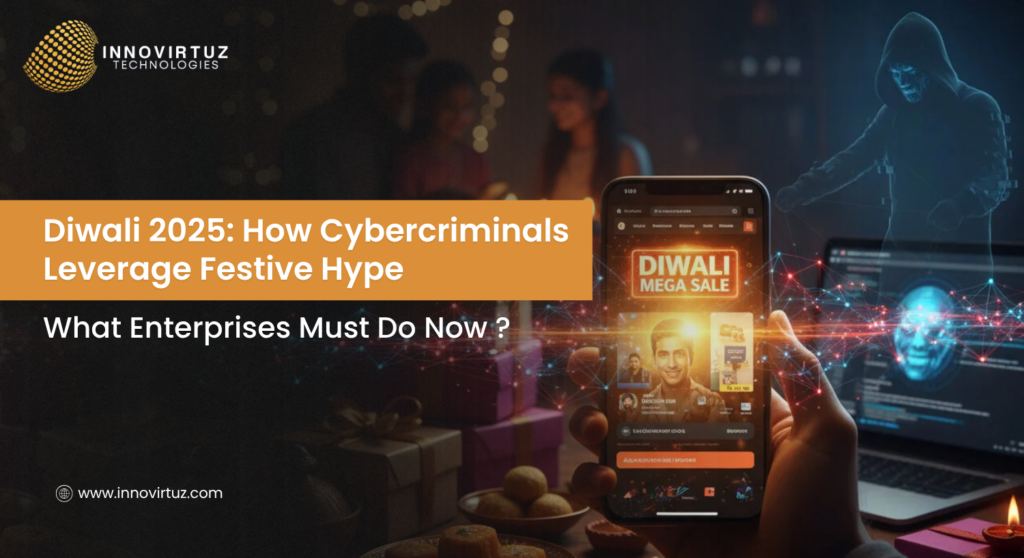
Diwali is a time for celebration, light, and togetherness. But for cybercriminals, it’s also a window of opportunity. Each year, festive seasons in India witness a spike in cyber frauds, phishing, identity theft, and infrastructure breaches, targeting not just consumers, but large enterprises, campuses, auditoriums, and government systems. In 2025, with AI-powered deepfakes, fake e-commerce offers, and insider threats on the rise, CIOs, CISOs, COOs, and facility heads must stay one step ahead. This blog explores How Cybercriminals Leverage Festive Hype – the top threats this Diwali, real trends from Indian cybersecurity reports, and the infrastructure, AV, and security actions enterprises must take now. 1. Why Diwali is High-Risk for Cybercrime? AI-powered fraud is spiking: According to Business Standard, nearly 1 in 3 Indians encountered Diwali-related fraud in 2024, driven by AI voice cloning, deepfakes, and scam campaigns (Business Standard) Phishing, QR scams, and fake portals rise during sales, warns The Indian Express, with attackers targeting enterprise staff, vendor chains, and unsecured AV networks during events (Indianexpress). Zee News cautions against festive-season scams mimicking banks, shopping sites, and internal IT alerts (Zee News India). IT and cybersecurity teams often operate with reduced staff over the holidays, while infrastructure faces peak loads (streaming, conferencing, payments). 2. Top Risks for Large Enterprises During Diwali Threat Description Impact Phishing / Email Spoofing Fake internal messages with Diwali offers, gift links Credential theft, malware drop Deepfake & Voice Cloning Executives spoofed to request fund transfers or access Insider fraud, reputational loss Compromised AV / Event Systems Live stream hijacking or surveillance tap-ins PR damage, data leaks Supply Chain Attacks Fake vendors, fraud via partner portals Data breach, legal issues Weakened Physical Access Controls Open access for guests without real-time oversight Intrusions, sabotage 3. What Enterprises Should Do Before the Festival ? A) Harden Cybersecurity Systems Enable MFA enterprise-wide Update endpoint protection & patching Run phishing simulations for staff Use SIEM / SOC monitoring with escalation paths Leverage anomaly detection for AI-led frauds (e.g., voice deepfake alerts) 🔗 Explore Cybersecurity Services by Innovirtuz: https://innovirtuz.com/cyber-security-solutions/ B) Secure Physical Access & Surveillance Check all CCTV feeds, access logs, storage Create zonal access controls for auditoriums/events Integrate with biometric or mobile access systems Ensure NVR/DVR firmware is up-to-date 🔗 See Innovirtuz’s Physical Security Solutions: https://innovirtuz.com/physical-security-solutions/ C) Stabilize AV Infrastructure for Events Load test AV systems before Diwali shows/conferences Configure centralized control systems (audio, LED walls, PTZ cams) Ensure AV-over-IP networks are segmented and monitored 🔗 Explore AV & Collaboration Services: https://innovirtuz.com/audio-visual-solutions/ D) Backup, DR & Redundancy Readiness Audit disaster recovery plans for apps/data Confirm redundant paths, load balancers, failover protocols Ensure backups are recent, tested, and encrypted. 4. Who Should Own This Readiness? Role Key Responsibilities CIO / CTO Ensure infrastructure, backup, DR scalability CISO Lead cyber risk audits, SOC monitoring, phishing drills COO / Facility Head Oversee physical access, AV coordination, vendor checks Event / Comms Heads Ensure safe AV/live-streaming, public interface security 5. What the Market Says ? IMARC Group: India’s physical security market will hit USD 10.9B by 2033. TechSci Research: India’s PSIM market is growing at 12.27% CAGR till 2030. MarketsandMarkets: Global cyber threat intelligence market will reach USD 24.3B by 2027, with India being key. 6. Diwali Readiness Checklist Cybersecurity audit complete AV systems stress-tested Staff trained on phishing threats Backups verified and DR rehearsed Physical access systems updated SIEM/alerts integrated to SOC/command centre Conclusion: Don’t Let Cybercriminals Dim Your Lights Diwali is about illumination, but for India’s enterprise tech leaders, it’s also about vigilance. Cybercrime peaks during festive periods — and the stakes are highest for large enterprises, institutions, and public entities. By aligning cybersecurity, AV, and physical security with seasonal risks, decision makers can ensure a safe, seamless Diwali for everyone. Plan a Pre-Diwali Infrastructure & Security Audit with Innovirtuz Today. Contact Now
How CISOs Should Rethink Infrastructure & Security in 2025 – Insights for Indian Enterprises
In 2024–25, several high‑impact cyber incidents in India and globally made headlines, from ransomware attacks to supply‑chain disruptions affecting critical infrastructure. As large enterprises and government bodies accelerate digital transformation, IT infrastructure and cybersecurity cannot remain separate silos, they must evolve together as a unified, resilient domain. For CISOs, CIOs, CTOs, and other technology leaders, 2025 presents a pivotal moment. The threat landscape is shifting rapidly, regulatory scrutiny is intensifying, and infrastructure complexity is growing. The decisions made now will define organizational resilience, continuity, and competitive differentiation. In this article, we examine: The evolving threat & infrastructure landscape in India. Key tensions and challenges facing security leaders. Strategic imperatives to reimagine infrastructure and security. Real-world use cases and outcomes. A practical roadmap to guide execution. 1. The Evolving Indian Landscape: Threats & Market Forces 1.1 A Surge in Sophistication & Expanding Attack Surface According to government data, cybersecurity incidents in India nearly doubled from 10.29 lakh in 2022 to 22.68 lakh in 2024. Press Information Bureau. In 2024, digital fraud and cybercrime led to enormous losses: reports indicate that nearly ₹22,845 crore was lost in cyber fraud in India in one year. The Times of India. Globally, Enterprises are grappling with advanced attacks (ransomware, supply chain weaknesses, AI‑assisted threats). A survey by Proofpoint’s Voice of the CISO 2025 found that 99% of Indian firms reported data loss in 2024, and over 74% admitted their organizations were poorly prepared for attacks. The Economic Times. India also saw a fourfold jump in high‑value cyber fraud cases in FY2024, causing estimated losses around US$ 20 million. Reuters. These signals underscore that threat actors are getting more aggressive and adaptive and that many organizations are still playing catch‑up. 1.2 Infrastructure & Managed Services Growth Trends According to Grand View Research, India’s managed services market is projected to grow at a CAGR of ~16.1% between 2025 and 2030. Grand View Research A report by IMARC estimates the Indian managed services market size in 2024 (in INR) and forecasts continued growth through 2033, driven by rising infrastructure complexity and demand for outsourcing. IMARC Group Meanwhile, globally, managed services (especially in APAC) are seeing robust growth, with channel analysts noting ~13% year-on-year expansion. LinkedIn+1 The proliferation of hybrid, multi-cloud, edge computing, and distributed architectures is pushing enterprises to adopt integrated service models and rely on trusted system integrators. Takeaway: The confluence of escalating threats, increasing infrastructure complexity, and expanding managed services demand means organizations must rethink their approach or risk falling behind. 2. Key Challenges & Tensions for CISOs and IT Leaders 2.1 Talent & Resource Constraints Cybersecurity talent remains in short supply. Many in-house teams are overworked, hampered by skill gaps (AI, adversarial ML, threat hunting), and unable to keep pace with evolving threat vectors. 2.2 Speed vs. Risk Enterprises want agility, faster deployments, cloud migration, DevOps, and edge-based innovation. But speed often introduces vulnerabilities if security is tacked on late. Legacy systems, fragmented stacks, and isolated point tools increase risk. 2.3 Regulatory, Sovereignty & Compliance Pressures For government entities and regulated sectors, data localization, auditability, and sovereign control are non-negotiable. The balancing act between outsourcing and retaining control is delicate. 2.4 Hybrid & Multi‑Cloud Complexity Modern IT estates span on-prem, private cloud, public cloud, edge, and third‑party systems. Achieving unified identity, network controls, visibility, and threat detection across these layers is a major integration challenge. 2.5 Evolving Threat Models Attackers now exploit AI, target supply chains, and attempt zero‑trust bypass techniques. Organizations must move from passive defense to proactive anticipation, detection, and response. 3. Strategic Imperatives: Rethinking Infrastructure + Security To address current challenges and build resilient systems, CISOs should adopt the following imperatives: 3.1 Adopt Zero Trust & Adaptive Security by Design Operate under the assumption that no actor, internal or external, is inherently trusted. Use micro-segmentation to limit lateral movement and reduce blast radius. Embrace adaptive security, where systems adjust posture based on behaviour, risk scores, and contextual signals. 3.2 Fuse Security & Infrastructure: Infrastructure as Code + Security as Code Treat configuration, controls, policies, and enforcement as code that is versioned, reviewed, and auditable. Embed security into each layer (network, compute, storage) rather than applying patches later. 3.3 Leverage Managed, Co‑Managed & Hybrid Service Models Partner with a capable system integrator or MSP to fill capability gaps, provide 24×7 monitoring, and scale expertise. Co-management models allow you to retain control while outsourcing execution. Ensure clear SLAs, transparency, escalation paths, and measurable outcomes. 3.4 Invest in AI, Automation & Observability Use ML/AI for anomaly detection, threat hunting, behavioral analytics. Implement SOAR (Security Orchestration, Automation & Response) to automate response playbooks, reducing manual burden. Achieve full observability across logs, network flow, identity trails, and endpoint telemetry. 3.5 Integrate Governance, Risk & Compliance (GRC) Quantify cyber risk in business terms (financial impact, brand exposure). Deploy continuous compliance mechanisms to detect policy drift. Establish robust board/C‑suite reporting tied to business KPIs, not just technical metrics. 4. Use Cases & Outcomes (India / Comparable Enterprises) Case A: Public Sector Modernization A state government in India partnered with a national system integrator to overhaul its legacy infrastructure while embedding security from the ground up. Over 24 months, they achieved: ~40% reduction in unauthorized access events. ~30% reduced operational downtime. Stronger audit trails and compliance posture. Case B: Enterprise Travel & Hospitality Firm A medium‑large enterprise shifted from break/fix AMC to a comprehensive managed infrastructure and cybersecurity model. Outcomes included: 24×7 threat monitoring stopped multiple phishing and intrusion attempts. The internal IT team could refocus on innovation rather than firefighting. Predictable SLAs, better cost control, and stronger alignment with business goals. These examples demonstrate that integration of infrastructure and managed security is no longer optional; it’s essential to staying resilient. 5. Roadmap: From Strategy to Execution Phase Focus Key Actions 1. Assessment & Discovery Understand current posture Infrastructure audit, threat & maturity analysis, risk workshops. 2. Strategy & Design Blueprint target architecture Zero trust design, service model decision, tech evaluation. 3. Pilot / Proof of Concept Validate approach in scope
Strategic Guide to Enterprises and institutions Cybersecurity & Cyber Defense for CISOs, CIOs & CSOs in India
Strategic Guide to Enterprises and institutions Cybersecurity & Cyber Defense for CISOs, CIOs & CSOs in India With India’s digital economy and hybrid IT adoption accelerating, cybersecurity has become a boardroom priority. For CISOs, CSOs, CIOs, and senior IT leaders, the stakes are higher than ever. A single breach can cost millions, damage public trust, and lead to regulatory penalties. To combat this, organizations need advanced information security, cyber security, and cyber defense solutions that go beyond traditional measures. Why Cyber Security Is Now a Boardroom Priority The Rising Cost of Cybercrime for Enterprises and Governments According to industry research, the average cost of a data breach in 2025 exceeds $4.5 million (₹37+ crore as per IBM 2025 report). For government agencies and Fortune 500 companies, the cost—including reputational damage—can be significantly higher. Regulatory Pressures and Executive AccountabilityCISOs and CIOs face increasing pressure to ensure compliance with GDPR, NIST, ISO 27001, CMMC, and India’s Digital Personal Data Protection Act (DPDPA 2023), especially in sectors like finance, defense, and healthcare. Advanced Information Security Framework for Large Organizations Building Enterprise-Wide Security Architecture Adopt a layered security model integrating: Next-Generation Firewalls (NGFW) Endpoint Detection & Response (EDR) Data Loss Prevention (DLP) Systems Security Information & Event Management (SIEM) Risk-Based Security PrioritizationBreak into two short sentences for readability: “Not all assets are equal. Organizations must rank security investments by business impact, compliance risk, and threat intelligence. Cyber Security in the Era of Hybrid IT and Cloud Environments Securing Multi-Cloud and On-Prem Infrastructure As enterprises move to hybrid cloud, CISOs must deploy cloud-native tools with 24/7 real-time monitoring across on-prem and multi-cloud environments. Identity and Access Management for Large Enterprises Zero Trust Access Control ensures only verified users access mission-critical systems, reducing insider and external threats. Cyber Defense Solutions for Proactive Threat Mitigation AI-Driven Threat Intelligence Platforms Artificial intelligence can detect anomalies faster than traditional methods, reducing detection time and preventing revenue loss from downtime. Security Automation and Orchestration for Faster Incident Response Automation reduces MTTR, allowing CISOs to focus on strategy instead of routine tasks. Why CISOs Are Embracing Zero Trust Security Models Zero Trust = no implicit trust. Every request is verified, blocking lateral movement inside enterprise networks. The Role of Innovirtuz Technologies in Enterprise-Grade Security Tailored Cybersecurity Programs for Government and Fortune 500 Companies Innovirtuz delivers enterprise-scale cyber defense aligned with CERT-In, MeitY, and global compliance requirements. Aligning Security Strategy with Business Objectives ROI of Cyber Defense Investments For every $1 (≈ ₹83) spent on proactive cybersecurity, enterprises save an estimated $6 (≈ ₹500) in breach-related costs. In enterprise terms, for every ₹1 crore invested in proactive cybersecurity, organizations save up to ₹6 crore in breach-related costs” Building Executive-Level Cyber Risk Dashboards Innovirtuz enables IT leaders to track KPIs such as risk reduction percentage, compliance posture, and threat detection rates in real-time. Preparing for Future Threats: Quantum-Ready Security and Beyond With quantum computing on the horizon, Innovirtuz is enabling post-quantum cryptography to secure sensitive Indian government and enterprise data for the next decade. FAQs Q1. What makes Innovirtuz Technologies different from other providers?Ans. Innovirtuz delivers enterprise-scale, compliance-ready, AI-powered cyber defense solutions tailored for Indian government agencies, Fortune 500 companies, and large private enterprises. Q2. How do you help with regulatory compliance? Ans. Our security framework is aligned with global standards (GDPR, ISO 27001, NIST, CMMC) as well as India-specific regulations such as CERT-In guidelines and the Digital Personal Data Protection Act (DPDPA 2023). Q3. Can Innovirtuz integrate with our existing IT stack? Ans. Yes. Our solutions are designed for seamless integration across legacy systems, modern hybrid cloud environments, and campus-wide IT ecosystems. Q4. What industries do you specialize in? Ans. We serve banking & finance, defense & homeland security, government & PSU agencies, healthcare institutions, universities, and critical infrastructure sectors. Q5. What is the cost of inaction for CISOs? Ans. Delaying cybersecurity investments increases breach risk, compliance penalties, operational downtime, and reputational harm—costs that can run into crores of rupees. Conclusion: Why Innovirtuz Technologies Is the Trusted Partner for Senior IT Leaders For Indian enterprises, campuses, and corporates, cybersecurity is not just an IT function—it is the foundation of business continuity, compliance, and trust. Innovirtuz Technologies empowers CISOs with intelligence, tools, and expertise to stay ahead of evolving threats. Partner with us today for a tailored enterprise security assessment. Discover how Innovirtuz Technologies helps enterprises and institutions strengthen their cyber defense and build resilience against tomorrow’s threats. Partner with Innovirtuz Technologies AND transform Today Innovirtuz empowers CISOs with intelligence, tools, and expertise to stay ahead of evolving threats. Explore our Cyber Security Solutions.
Why This Admission Season Is the Right Time for Colleges to Secure Their IT Future
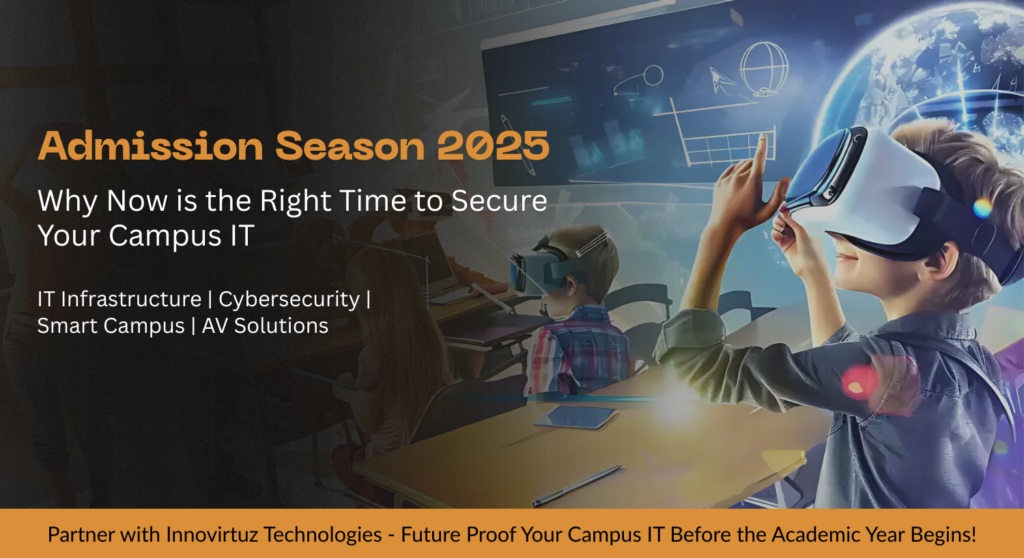
Why This Admission Season Is the Right Time for Colleges to Secure Their IT Future India’s higher education sector is undergoing a rapid digital transformation. With the ongoing admission season, most universities and colleges are busy attracting students, streamlining enrollment, and enhancing campus facilities. But here’s the challenge: while the focus remains on academics and admissions, IT infrastructure and cybersecurity often take a backseat—until an incident occurs. This is exactly why forward-thinking educational leaders are acting NOW to strengthen their campuses with scalable IT infrastructure, cybersecurity, and smart campus solutions that directly improve student experience, operational efficiency, and compliance. And this is where Innovirtuz Technologies comes in as your trusted IT System Integrator partner. The Pain Points That Can’t Be Ignored During the admission period, IT and management decision-makers in education face several critical challenges: Admission Portal Downtime: Overloaded servers during peak admissions lead to delays, frustrated parents, and reputational risk. Cybersecurity Threats: Universities are prime targets for ransomware and phishing attacks during this high-traffic season. Data Privacy & Compliance: With student data flowing in, compliance with CERT-In, UGC, and MeitY guidelines becomes non-negotiable. Disconnected Campus IT Systems: From admissions to hostel management, libraries, and ERP—fragmented IT systems create operational chaos. Outdated Audio-Visual Collaboration Tools: Poor virtual classroom experiences and limited hybrid learning tools hurt faculty and student engagement. Weak Physical Security & ELV Solutions: Lack of CCTV, access control, and visitor management risks campus safety. Reactive IT Support: IT teams get overwhelmed during this season without managed IT services to ensure uptime and 24/7 monitoring. How Innovirtuz Technologies Solves These Problems As a specialized IT System Integrator for the education sector, Innovirtuz Technologies delivers a future-ready, secure, and collaborative campus IT ecosystem through: Enterprise IT Infrastructure & Data Center Solutions Scalable compute and storage for admission portals High availability architecture to prevent downtime Campus-wide Wi-Fi and LAN optimization for seamless student and faculty access Cybersecurity & Information Security Next-Generation Firewalls (NGFW) Endpoint Protection (EPP) Threat Intelligence Platforms (TIP) Security Operation Centers (SOC) CERT-In compliance mapping Smart Campus & Physical Security (ELV) CCTV Surveillance and Access Control Visitor and Vehicle Management Smart ID and Attendance Systems Audio-Visual Collaboration & Hybrid Learning Lecture capture solutions Digital classrooms with AV integration Video conferencing and collaboration tools for faculty Managed IT Services 24/7 monitoring and proactive issue resolution IT helpdesk support for smooth campus operations Lifecycle management of IT assets Why Act NOW With admission budgets being finalized, this is the perfect window for universities and colleges to allocate IT investments before the academic year begins. ✅ Early Adoption = smoother campus operations during peak student onboarding. ✅ Competitive Advantage = technology-driven student experience that attracts admissions. ✅ Compliance Readiness = avoid penalties and ensure UGC and CERT-In alignment. NEP 2020 & Digital Campus Readiness Under the National Education Policy (NEP) 2020, institutions are being encouraged to adopt digital-first ecosystems, robust security, and collaborative learning tools. Decision-makers who align with this transformation during admission season will be ahead of the curve when government audits and new compliance norms are enforced. Why Innovirtuz Technologies With deep expertise in education sector IT transformation, Innovirtuz Technologies has partnered with leading campuses to: Reduce admission portal downtime by 70%. Strengthen cybersecurity posture and achieve CERT-In compliance. Deploy smart campus solutions that improve student and staff experience. Offer end-to-end managed IT services that cut operational overheads. We don’t just deliver IT—we deliver secure, smart, and future-proof campuses. Education CIOs, IT Heads, and Campus Directors, Let’s Connect with Innovirtuz Technologies: This admission season is the perfect time to reimagine your campus IT. Let’s ensure your technology is ready before your students walk in. Partner with Innovirtuz Technologies today and transform your campus into a digitally secure, collaborative, and compliant institution. Explore: innovirtuz.com/education 📧 Email: sales@innovirtuz.com | 📱 +91 9220809345 / 9205028345
Transforming India’s Education Landscape with Smart ICT & Security

Innovirtuz Technologies | Advancing NEP 2025 Vision Through Digital Campus Solutions India’s National Education Policy 2025 – an evolved extension of NEP 2020 – outlines an ambitious roadmap: achieving 100% Gross Enrollment Ratio (GER) by 2030, embedding vocational and skill-based learning, and positioning India as a global knowledge superpower by 2047. Central to its strategy are holistic, inclusive learning, integrated technology, and digital infrastructure for education.Public investment in digital learning, AI-skilling, and teacher development has been emphasized in Budget 2025–26 to support NEP’s mandates. The launch of initiatives like the SOAR AI program for school students further support India’s future-ready education ambitions. Key Challenges Facing Educational Institutions Legacy Infrastructure: Many campuses lack reliable IT infrastructure to support ERP/LMS, AI tools, and digital learning platforms. Cybersecurity Vulnerabilities: With sensitive student and institutional data at risk, compliance with MeitY and CERT-In mandates is critical. Hybrid Teaching Gap: Institutions need smart classrooms, lecture capture, and collaboration tools to support flexible learning. Operational Bottlenecks: Manual IT management and fragmented workflows hinder digital transformation. NEP 2025 Compliance: Institutions must implement scalable and secure technology aligned with NEP’s equity and quality goals. How Innovirtuz Technologies Aligns with India’s Education Vision Innovirtuz Technologies helps educational institutions realize NEP 2025 aspirations through a full suite of Smart Campus IT Infrastructure, Cybersecurity, AV & Smart Classroom solutions, Managed Services, Digital Library development, and Consulting. Our End-to-End Solution Portfolio From Agentic AI that doesn’t just alert but takes direct action, to predictive models that catch dark web buzz days before an attack, cybersecurity is becoming proactive and deeply tied to your brand’s survival strategy. Smart Campus IT Infrastructure High-speed wired & Wi‑Fi connectivity for all campus zones ERP/LMS integrations and cloud-ready, virtualized architecture Structured cabling and resilient data center deployment ERP to automate medical & dental colleges Cybersecurity for Education Institutions 24×7 SOC‑as‑a‑Service (Security Operations Center) with threat detection IAM, endpoint protection, vulnerability testing (VAPT), and audit readiness Full compliance with MeitY, CERT‑In, and UGC cybersecurity norms AV & Smart Classroom Experience Hybrid learning enablement with lecture capture and interactive displays Smart boards, webinar systems, and digital collaboration tools Managed IT & AMC Services Proactive infrastructure monitoring and patch management Hardware health checks, performance reporting, and SPOC Preventive maintenance and quarterly roadmap reviews Digital Library & Knowledge Hub Integration High-availability servers and digital library setup Support for DIKSHA-aligned digital resource delivery across platforms Strategic Consulting & Transformation Planning Smart campus master planning aligned with NEP’s digital equity goals BIM & Digital Twin-based infrastructure modeling Cyber safety compliance audits and roadmap development Why Innovirtuz is the Ideal Partner for Education Transformation 18+ years of experience in ICT, cybersecurity, AV, and campus transformation. Deep alignment with NEP, Digital India, and education compliance frameworks. Scalable infrastructure solutions tailored for diverse institutional needs. Experienced teams focused on technology-enabled education innovation. Proven impact across schools, colleges, and universities across India. As India advances toward Viksit Bharat 2047, educational institutions that embrace modern campus IT infrastructure, educator empowerment, and secure digital ecosystems will shape the country’s future. Innovirtuz Technologies is honored to be your strategic partner in bringing NEP 2025’s digital vision to life. Ready to build a NEP-aligned, future-ready campus? Explore: innovirtuz.com/education 📧 Email: sales@innovirtuz.com | 📱 +91 9220809345 / 9205028345
Cyber Security Has Moved Underground: Is Your Business Ready?

Most organizations still fixate on patching servers and scanning SIEM dashboards. But the harsh reality? Today’s cyber threats take shape long before your logs reveal a single clue. Modern attacks start deep in the hidden corners of the internet — dark web forums, encrypted markets, and Telegram channels. This underground ecosystem is where ransomware gangs auction stolen data, insiders leak intellectual property, and hackers trade zero-day exploits. If you’re not monitoring these shadows, your business is blind to the earliest warning signs. Why the Hidden Internet Matters More Than Ever Surface Web: Just 5% of the internet — your standard search and browsing. Deep Web: Internal systems, private portals, sensitive databases. Dark Web: The real battleground. Here, cybercriminals plan breaches, extort brands, and exploit stolen credentials. How Leading Companies Stay Ahead Advanced Threat Intelligence Platforms (TIPs) now do far more than maintain blocklists: Monitor dark web chatter for your brand and leaked credentials. Watch ransomware leak sites — before you get a ransom note. Map suspicious IPs & malware hashes to known threat groups. Feed live intelligence into SIEM, SOAR & EDR tools to adapt defenses in real time. This evolution connects cybersecurity directly with legal, PR, compliance — protecting your trust and reputation alongside your data. The Future: Predictive, Automated, Unified From Agentic AI that doesn’t just alert but takes direct action, to predictive models that catch dark web buzz days before an attack, cybersecurity is becoming proactive and deeply tied to your brand’s survival strategy. Explore More: Insights from Our CEO Our CEO & MD Mr. Amit Chahal recently shared these insights on his personal LinkedIn — sparking conversations with industry leaders worldwide. 👉 Read his original post here We invite you to join the discussion, share your views, and see how other cybersecurity leaders are preparing for this underground shift. Ready to evolve your cybersecurity strategy? Let’s discuss how threat intelligence and dark web monitoring can protect your brand. Contact our team to start a conversation.